


























Three simple steps to find the right coverage
You don't need to become an insurance expert to protect what you've built. That's what we're here for.
Saint Moore Insurance is a family-owned independent agency with access to top-rated personal and commercial carriers. We'll help you find the best coverage at the best price for your vehicle, your home, or your business.
Family-owned insurance agency in Redlands, CA since 1958 offering personal and commercial insurance coverage in all 50 states.
With 500+ major carrier partners, Saint Moore Insurance helps you find the coverage you need at the best possible value.
Protects your company’s assets, people, operations and future from risks and losses.
Explore Business Insurance

Find the perfect fit for your needs with Saint Moore's expansive network for insurance carriers.
Explore Home & Auto Coverage
Access top-rated carriers with concierge representation that finds the best fitting coverage for your needs.
Explore Group Health Coverage

Find professional business coverage
Find home, auto, and personal insurance coverage
Find suitable health and life coverage for your organization.
We'll match you with the best insurance carriers to protect you and your assets.


You don't need to become an insurance expert to protect what you've built. That's what we're here for.


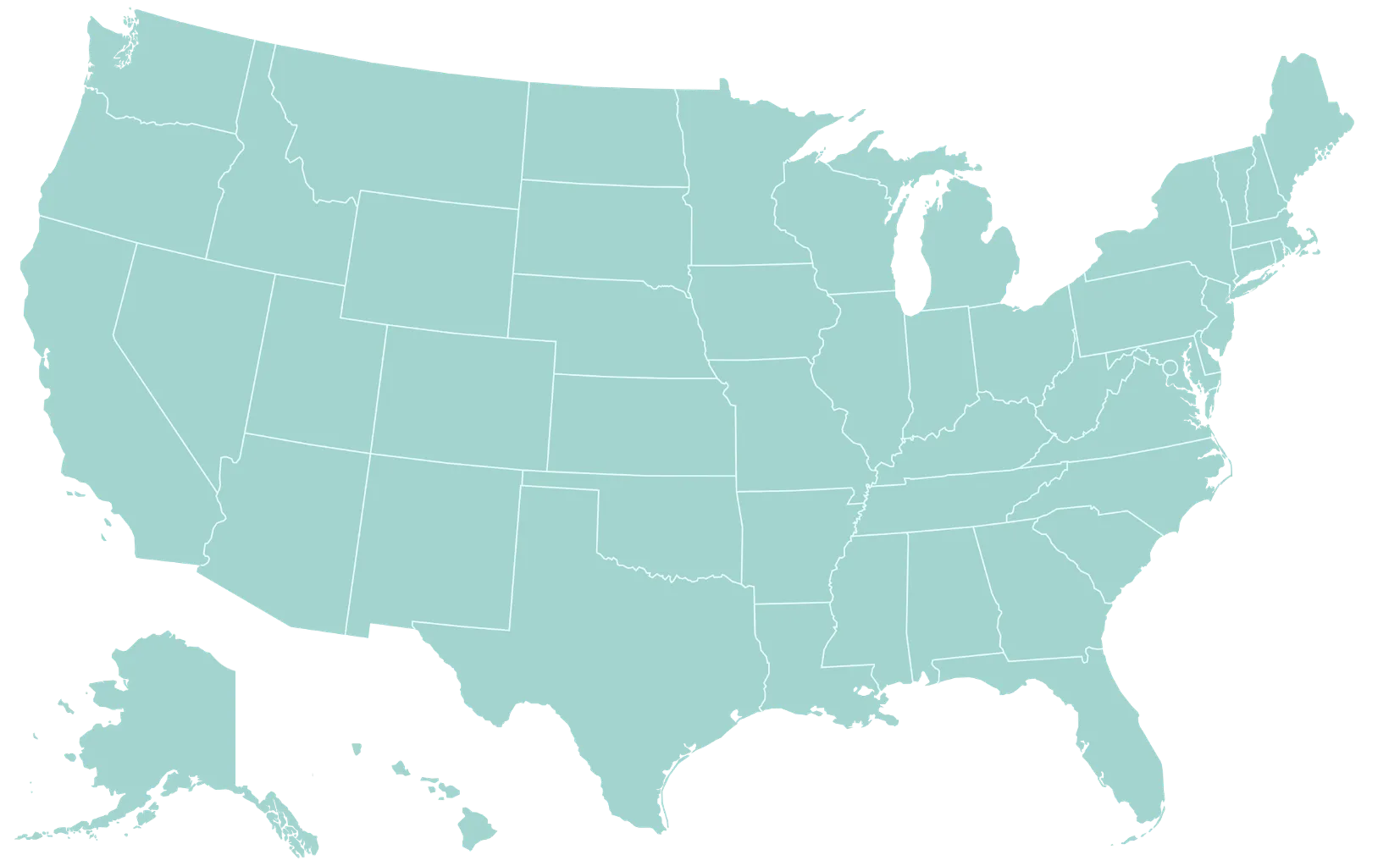
St. Moore is headquartered in Redlands, CA, and deeply rooted in the Inland Empire but our carrier network covers all 50 states. Whether you're a local homeowner, a regional business, or have assets across multiple states, we have the market access to protect them.
Saint Moore Insurance Agency gis headquartered in Redlands, CA, and deeply rooted in the Inland Empire but our carrier network covers all 50 states. Whether you're a local homeowner, a regional business, or have assets across multiple states, we have the market access to protect them.
Saint Moore Insurance clients have a local team that knows their name, knows their policy, and picks up the phone. Whether you're protecting your home, your vehicle, or your business — we make sure what you've built stays protected.
Because we work for you, not for an insurance company. As an independent agency, we’re not limited to one carrier’s products. We shop the market, explain your options in plain English, and stick around after the policy is signed.
Most of our clients come to us after feeling ignored, overcharged, or dropped by a big-name carrier. We take the time to actually listen, and we’ve been doing it in the Inland Empire since 1958.
Uninsured motorist coverage is generally designed to help protect you if you’re in an accident caused by a driver who has no insurance, or not enough to cover your damages. It’s more common than you’d think.
In California, carriers are required to offer it, though you can decline it in writing. We generally recommend keeping it, because you can control your own coverage, but you can’t control who’s in the other lane.
Collision coverage is generally designed to help pay for damage to your own vehicle when you’re in an accident, whether you hit another car, a guardrail, or a parking lot pole. It covers your car regardless of who’s at fault.
Like comprehensive, it’s optional under California law, but lenders and leasing companies typically require it if you’re financing your vehicle.
Comprehensive coverage is generally designed to help pay for damage to your vehicle that happens outside of a collision. Things like theft, fire, vandalism, a weather event, or hitting an animal. If your car gets stolen or a tree falls on it in a storm, comprehensive is what steps in.
It’s optional in California, but if your car has real value to you or you’re still making payments on it, it’s worth having.
Premium increases can be driven by your claims history, changes in your property, your carrier's internal rate adjustments, or broader market conditions, especially in Southern California's fire-risk environment. We can review your current policy and shop the market to see if better pricing is available. In many cases, we find meaningful savings.
We're your advocate throughout the claims process. You can call us directly, you don't have to figure it out alone. We'll help you navigate the process, communicate with the carrier on your behalf, and make sure you get what you're owed.
We're paid a commission by the carrier when we place a policy. There's no extra cost to you for using an independent agent, and in most cases, you'll pay less because we can find more competitive options than going direct to a single carrier.
A captive agent (like State Farm or Allstate) can only offer policies from one company. As an independent agency, St. Moore works with 40+ carriers. Which means we shop the market on your behalf to find the best coverage at the best price for your specific situation.
No. Standard homeowners policies exclude both flood and earthquake damage, which surprises a lot of California homeowners after a loss. Each requires a separate policy. Flood coverage is available through the National Flood Insurance Program or private carriers, and earthquake coverage through the California Earthquake Authority or private markets. If you own a home in a flood or fire zone, this is worth reviewing with a Saint Moore agent before you need it.
Our property lines cover the building you live in and everything inside it. That includes homeowners insurance, condo insurance, renters insurance, plus flood and earthquake coverage that standard home policies leave out. Whether you own or rent, we help you find property coverage built for where you live. See all of our property insurance options.
A standard homeowners policy covers four main areas:
Importantly, standard policies do not cover floods or earthquakes. Those require separate policies. We'll make sure you understand exactly what's covered and where your gaps are.
Premium increases can be driven by your claims history, changes in your property, your carrier's internal rate adjustments, or broader market conditions, especially in Southern California's fire-risk environment. We can review your current policy and shop the market to see if better pricing is available. In many cases, we find meaningful savings.
Yes, and this is one of the most common situations we help with. As an independent agency, we have access to specialty markets and carriers that specialize in hard-to-place risks, including high fire-hazard areas in Southern California. Don't wait. Call us as soon as you receive a notice so we have time to find you solid options before your coverage lapses.
There is no flat rate, because your premium depends on your industry, size, revenue, location, and the specific coverages you carry. A small office and a roofing contractor face very different risks, so they pay very different premiums. The good news is that as an independent agency, Saint Moore shops your coverage across many carriers to find competitive pricing for your exact risk profile. The best way to get a real number is to request a quote and let us build it around your business. Start with our business insurance options.
We cover businesses of every size, from a single-truck operation to a multi-location company. Common coverages include general liability, workers' compensation, commercial property, commercial auto, and a Business Owner's Policy that bundles the essentials. We also write specialized lines like professional liability and cyber. Browse our full range of business insurance options.
At minimum, annually, ideally before your renewal date. But any time your business changes significantly, your coverage should be reviewed:
Most of our commercial clients hear from us proactively throughout the year, not just at renewal. That's the difference between a broker who manages your account and one who just processes it.
Your ExMod is a number calculated from your workers' compensation claims history that directly multiplies your premium. A 1.0 is the industry average. Above 1.0 means you're paying a surcharge, in some cases tens of thousands of dollars extra per year. Below 1.0 means you're getting a credit.
The problem is that most business owners don't know what their ExMod is, how it's calculated, or what they can do about it. We help clients understand their ExMod trajectory and put strategies in place to bring it down over time, which compounds into real savings at every renewal.
It depends on your industry, size, and risk profile, which is exactly why we start with a conversation, not a quote form. Most businesses need at minimum:
Depending on your business, you may also need commercial auto, professional liability, cyber liability, or a Business Owner's Policy (BOP). We do a full exposure analysis to make sure nothing falls through the cracks.
Often, yes. Group long-term disability typically caps at around 60 percent of salary with a monthly maximum, and benefits are usually taxable when the employer pays the premium. An individual policy fills the gap and stays with you when you change jobs.
Yes. Carriers qualify self-employed applicants using tax returns and 1099s, and this is often the single most important policy for business owners since no employer plan stands behind them.
It is the waiting period between when you become disabled and when benefits begin, commonly 30 to 90 days. A longer elimination period lowers your premium, so we set it based on your savings cushion.
Most policies replace 50 to 70 percent of gross income up to the policy's monthly maximum. When you pay the premium yourself with after-tax dollars, benefits are generally received income tax free.
Often, yes. Carriers underwrite conditions differently, so placement matters, and simplified-issue final expense policies ask fewer questions. If your employer offers group life insurance, that coverage is issued with no medical questions at all. We help you find the path that works.
Final expense insurance is a smaller whole life policy, commonly between $5,000 and $25,000, designed to cover funeral costs and last bills. Underwriting is simplified, so approval is realistic even later in life or with health conditions.
IUL is permanent coverage with flexible premiums where cash value growth is tied to a market index, with floors that protect against down years. It suits people who want lifelong protection plus tax-advantaged accumulation.
Term life covers a set period, commonly 10, 20, or 30 years, at the lowest cost. Whole life never expires, keeps level premiums, and builds guaranteed cash value. Many families use term for the working years and add permanent coverage for lifelong needs.
A typical plan covers an annual eye exam and provides an allowance toward lenses, frames, or contacts each year, plus discounts on extras like coatings. Family plans extend the same benefits to your spouse and kids.
Preventive care like cleanings and exams is typically covered right away. Basic and major work often carries a 6 to 12 month waiting period, and some carriers waive it with proof of prior coverage. We flag every waiting period before you enroll.
Some full-service plans include orthodontic benefits for braces and aligners, usually with a waiting period and a lifetime maximum. If orthodontics are on your horizon, tell us up front and we will quote the plans that actually cover them.
Yes. You can buy dental alone, vision alone, or bundle both with one carrier. Bundling keeps one bill and often reduces the combined premium.
On-exchange plans are sold through your state's ACA marketplace and are the only plans eligible for subsidies. Off-exchange plans are purchased directly from carriers and sometimes offer networks or designs the marketplace does not list. We compare both channels side by side.
Premium tax credits are income-based subsidies that lower the monthly cost of marketplace plans. Eligibility depends on household size and income. We estimate your credit before you apply so there are no surprises at tax time.
No. Individual health rates are filed with state regulators, so the premium is identical whether you enroll directly or through a licensed agent. Working with Saint Moore adds a subsidy check, plan comparisons, and year-round support at no added cost.
Yes, if you have a qualifying life event. Losing job coverage, moving, getting married, having a baby, or aging off a parent's plan each opens a special enrollment period, usually 60 days from the event. We confirm which window applies to you before you apply.
Often, yes. Group long-term disability typically caps at around 60 percent of salary with a monthly maximum, and benefits are usually taxable when the employer pays the premium. An individual policy fills the gap and stays with you when you change jobs.
Yes. Carriers qualify self-employed applicants using tax returns and 1099s, and this is often the single most important policy for business owners since no employer plan stands behind them.
It is the waiting period between when you become disabled and when benefits begin, commonly 30 to 90 days. A longer elimination period lowers your premium, so we set it based on your savings cushion.
Most policies replace 50 to 70 percent of gross income up to the policy's monthly maximum. When you pay the premium yourself with after-tax dollars, benefits are generally received income tax free.
Often, yes. Carriers underwrite conditions differently, so placement matters, and simplified-issue final expense policies ask fewer questions. If your employer offers group life insurance, that coverage is issued with no medical questions at all. We help you find the path that works.
Final expense insurance is a smaller whole life policy, commonly between $5,000 and $25,000, designed to cover funeral costs and last bills. Underwriting is simplified, so approval is realistic even later in life or with health conditions.
IUL is permanent coverage with flexible premiums where cash value growth is tied to a market index, with floors that protect against down years. It suits people who want lifelong protection plus tax-advantaged accumulation.
Term life covers a set period, commonly 10, 20, or 30 years, at the lowest cost. Whole life never expires, keeps level premiums, and builds guaranteed cash value. Many families use term for the working years and add permanent coverage for lifelong needs.
A typical plan covers an annual eye exam and provides an allowance toward lenses, frames, or contacts each year, plus discounts on extras like coatings. Family plans extend the same benefits to your spouse and kids.
Preventive care like cleanings and exams is typically covered right away. Basic and major work often carries a 6 to 12 month waiting period, and some carriers waive it with proof of prior coverage. We flag every waiting period before you enroll.
Some full-service plans include orthodontic benefits for braces and aligners, usually with a waiting period and a lifetime maximum. If orthodontics are on your horizon, tell us up front and we will quote the plans that actually cover them.
Yes. You can buy dental alone, vision alone, or bundle both with one carrier. Bundling keeps one bill and often reduces the combined premium.
On-exchange plans are sold through your state's ACA marketplace and are the only plans eligible for subsidies. Off-exchange plans are purchased directly from carriers and sometimes offer networks or designs the marketplace does not list. We compare both channels side by side.
Premium tax credits are income-based subsidies that lower the monthly cost of marketplace plans. Eligibility depends on household size and income. We estimate your credit before you apply so there are no surprises at tax time.
No. Individual health rates are filed with state regulators, so the premium is identical whether you enroll directly or through a licensed agent. Working with Saint Moore adds a subsidy check, plan comparisons, and year-round support at no added cost.
Yes, if you have a qualifying life event. Losing job coverage, moving, getting married, having a baby, or aging off a parent's plan each opens a special enrollment period, usually 60 days from the event. We confirm which window applies to you before you apply.
Yes, and bundling is one of the easiest ways to save. Combining policies like home, auto, and umbrella with the same carrier often earns a multi-policy discount and makes your coverage simpler to manage. As an independent agency, Saint Moore can compare bundled options across many carriers to find the combination that gives you the best coverage at the best price. Ask us to review your personal insurance as a package.
Valuable articles coverage protects high-value items that a standard home or renters policy limits or excludes, such as jewelry, fine art, watches, collectibles, and firearms. Most home policies cap how much they will pay for these items, often well below their real value. A separate valuable articles policy insures them for their full appraised worth, frequently with no deductible. If you own anything irreplaceable, ask us about valuable articles coverage.
Life insurance is generally designed to protect the people who depend on you. If your income helps pay a mortgage, raise children, or support a partner, a policy can replace that income and keep your family financially stable if something happens to you. It can also cover final expenses and outstanding debts so loved ones are not left with the bill. A Saint Moore agent can help you find the right amount and type of life insurance for your situation.
Personal umbrella insurance adds a layer of liability protection on top of your home and auto policies. If you are found responsible for an accident and the costs exceed your underlying limits, the umbrella picks up where those policies stop. It is surprisingly affordable for the protection it provides, and it is worth considering if you own a home, have savings to protect, or simply want more peace of mind. Learn more about personal umbrella coverage.
Most people think of home and auto, but personal insurance covers a lot more of your life. It includes life insurance for your family's financial security, personal umbrella coverage for liability beyond your other policies, valuable articles coverage for jewelry and collectibles, plus identity theft, travel, and pet insurance. See all of our personal insurance options.
A standard homeowners policy covers four main areas:
Importantly, standard policies do not cover floods or earthquakes. Those require separate policies. We'll make sure you understand exactly what's covered and where your gaps are.
Premium increases can be driven by your claims history, changes in your property, your carrier's internal rate adjustments, or broader market conditions, especially in Southern California's fire-risk environment. We can review your current policy and shop the market to see if better pricing is available. In many cases, we find meaningful savings.
Yes, and this is one of the most common situations we help with. As an independent agency, we have access to specialty markets and carriers that specialize in hard-to-place risks, including high fire-hazard areas in Southern California. Don't wait. Call us as soon as you receive a notice so we have time to find you solid options before your coverage lapses.
Yes. Hard-to-place risk is exactly where an independent agency earns its keep. Because we are not tied to a single carrier, we can reach specialty and surplus lines markets that direct writers cannot. Whether you have been turned down elsewhere or simply have a complex situation, we will work to find you a solution. Reach out and tell us what you are dealing with.
If a standard carrier has declined to cover you, or if your risk involves something most policies exclude (aircraft, large events, cargo in transit, or a business that depends on one essential person) specialty coverage is likely the answer. The simplest way to find out is to ask. A Saint Moore agent can review your situation and tell you whether a standard policy will work or whether you need a specialty market.
Standard policies are designed for common, predictable risks. When your exposure falls outside those boundaries, a standard policy may exclude the claim entirely, leaving you unprotected. Specialty insurance is written specifically for the risk you actually have, with terms and limits matched to it. That is the difference between assuming you are covered and knowing you are.
Our specialty lines include aviation insurance for aircraft owners and pilots, marine cargo insurance for goods in transit, event insurance for one-time gatherings, and key person insurance that protects a business if a critical owner or employee is lost. If your risk is unusual or hard to place, we will shop specialty carriers to find the right fit. Explore our specialty insurance options or call us to talk through your situation.
Specialty insurance covers risks that standard auto, home, or business policies are not built to handle. Think aviation, marine cargo, event coverage, or key person protection. These are situations where the exposure is unusual, complex, or simply outside what a typical carrier will write. As an independent agency, Saint Moore taps into specialty markets to find coverage for clients whose needs do not fit a standard policy.